If You Have a Virus Once Can You Get It Again
For the nigh up-to-date news and information about the coronavirus pandemic, visit the WHO and CDC websites.
Since the first of the coronavirus pandemic, experts accept grappled with the question of how much immunity someone has in one case they've been sick with COVID-19 and whether that'll protect them in the future. While the coronavirus continues to mutate and work its style around the globe, more people take recovered from COVID-19 and may be wondering what kind of immunity that gives them to ward off a second infection, and whether they still need a vaccine. The respond to that second question is yes.
According to the Usa Centers for Affliction Control and Prevention, every person eligible should become a COVID-19 vaccine, including those who've been sick with the coronavirus and recovered. This is because studies have shown that vaccination provides a strong heave in immunity to those who've recovered from COVID-nineteen, and vaccination is a much safer style to get immunity from the coronavirus than getting infected with COVID-19.
A CDC written report released in Baronial establish that unvaccinated people who previously had COVID-19 were about two.34 times more likely to get reinfected than vaccinated people who've had it. Another report published this month by scientists at the Yale School of Public Health and the University of North Carolina at Charlotte, which examined other coronaviruses related to the virus that causes COVID-19, plant that amnesty following COVID-nineteen infection might be brusque-lived. This may be specially true with contagious new variants such as delta and delta plus.
"As new variants arise, previous immune responses become less constructive at combating the virus," said Alex Dornburg, who co-led the written report, according to a Yale press release. "Those who were naturally infected early in the pandemic are increasingly likely to become reinfected in the near future."
Matt Weissenbach, epidemiologist and senior managing director of clinical affairs for clinical surveillance and compliance at Wolters Kluwer, told CNET in August that you should recollect of a coronavirus vaccine equally a "peak-off" to your allowed organisation'south gas tank if yous've already had COVID-19.
"Certainly, any immunity is better than nothing," Weissenbach said. "Only at this betoken in that location's no replacing the protective cistron of vaccination."
How much natural immunity do you have afterward COVID-xix, exactly? How likely are you to become it twice? Does it mean yous tin skip the 2d dose of the vaccine? For many questions surrounding the coronavirus, enquiry is however underway. Here, we walk you through what experts know and, merely equally importantly, what they don't know about COVID-19 reinfection, including what to look out for and steps you can accept to protect yourself and get tested.

Patients get checked in for their doctors' appointment outside the facility and aren't permitted indoors until they get a text that the doctor is ready to see them. Free N95 masks were being given to those nigh to enter.
Sarah Tew/CNETIs getting reinfected with COVID-nineteen something I should worry almost?
As of Baronial, Weissenbach said COVID-19 reinfection cases brand upwards less than i% of all COVID-19 cases. But tracking reinfection accurately is difficult because of decentralized testing, lack of advice between labs and a limited number of U.s. labs that relieve COVID-19 testing samples, he said. In club to confirm reinfection, scientists need to compare the genetic material of previous and current tests.
Another cistron that might atomic number 82 to underreported reinfection cases is that many second instances of COVID-19 are balmy, which leads people to not realize they're infected once again, virologist Theodora Hatziioannou told Healthline.

Recovering from COVID-19 can require bedrest.
Angela Lang/CNETDoes testing positive twice mean I've definitely been reinfected?
Not necessarily, especially if you lot're tested within iii months of get-go getting sick, co-ordinate to Weissenbach. If someone tests positive for COVID-19, tests negative and then tests positive once again, it'due south likely due to viral shedding of the original virus, he said.
"Many viruses can shed for quite some time after the disease has subsided," Weissenbach said. True reinfection with COVID-19 ways that someone was infected with the virus on two different occasions, usually months autonomously. Long COVID-nineteen, a syndrome that some people develop later having the coronavirus, is also not a reinfection or active infection.

In the waiting room at the doctors' function, signs on every chair ask that patients refrain from sitting.
Sarah Tew/CNETWhy practise I need the vaccine if I've already had COVID-nineteen? Do I demand both doses?
According to a written report from Kentucky that was analyzed in the CDC study on COVID-xix reinfection, people who previously had COVID-19 were about twice every bit likely to get it again if they weren't vaccinated, suggesting that the coronavirus vaccines are very effective even if you lot've already had the virus.
"If you have had COVID-nineteen before, please yet become vaccinated," CDC Director Dr. Rochelle Walensky said in August. "Getting the vaccine is the all-time way to protect yourself and others effectually yous, especially as the more contagious delta variant spreads around the country."
Weissenbach said that the strength of someone'south natural immunity from infection probable won't last "over the long haul," and that vaccination might provide amend protection. This is because vaccines target a "detail reaction" from your allowed system, he said.
"It'south done and then in a very targeted and emphasized way so that it more often than not is going to be a more robust, lasting allowed response than may otherwise be provided naturally through your body," Weissenbach said. Think of it as a "double dose," he said.
Just research shows people who've already had COVID-nineteen strongly benefit from a single dose of a COVID-19 vaccine, which is not the case for people who haven't been sick. Co-ordinate to an article in Nature, some people who've had COVID-19 and received but one vaccine shot mount immune responses equal to or greater than people who got both doses only never had COVID-19.
To sum it up: Inquiry shows that COVID-19 vaccines requite you stronger immunity if you've already had the virus, but it probably isn't every bit imperative for y'all to get both doses, though the guidance still is for everyone to get both.
Long COVID-19 and vaccines
Getting a coronavirus vaccine is helping some who are living with what'southward often called "long COVID" subsequently existence diagnosed with the coronavirus. Experts are still researching why, exactly, but getting a COVID-19 vaccine is helping save the symptoms of some long-haulers.
In an earlier conversation with CNET almost long COVID, Dr. Nasia Safdar, director of infection control at the Academy of Wisconsin, said, "Vaccination serves two purposes 1, of course yous desire to become it before you have COVID so information technology protects you from it, only even in the people who have had the infection, anecdotally, it seems that vaccination helps with the symptoms of long COVID."
If I'yard sick, how long should I wait to get the vaccine?
According to this Q&A with Dr. Jennifer Pisano, an infectious illness specialist with the University of Chicago Medicine who likewise had COVID-nineteen and is now vaccinated, you can become the vaccine anytime after you're no longer infectious or in quarantine.
People who received monoclonal antibodies or convalescent plasma equally treatment for COVID-19, however, should wait xc days earlier getting the vaccine, according to the CDC. Information technology's recommended to wait if you've received monoclonal antibodies as treatment because they forbid your body from forming a robust immune response to the vaccine, according to a Cleveland Clinic report.
People with multisystem inflammatory syndrome should besides consider delaying vaccination until they're no longer sick, the CDC says.
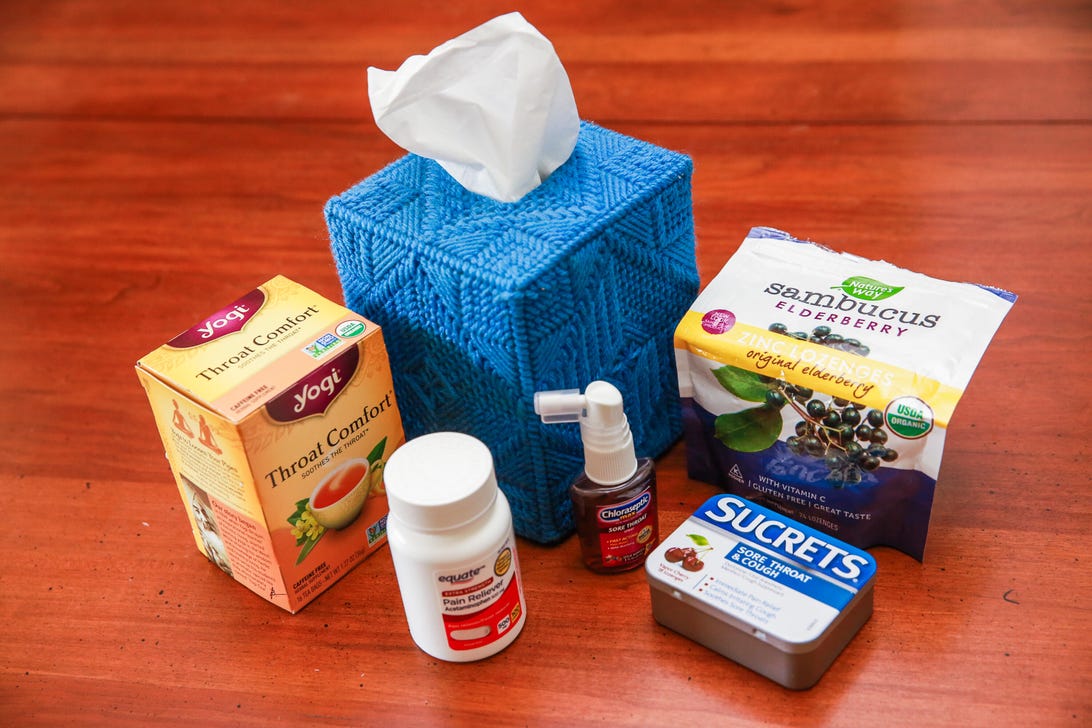
It's difficult to say whether COVID-19 symptoms such as dry coughing and headache get worse or ameliorate with a 2nd infection.
Sarah Tew/CNETIs COVID-xix worse the commencement time or the 2d?
With most viruses, a second infection is usually milder than the first because the torso has built antibodies against it. Notwithstanding, that's not always the case, and in that location's still much about SARS-CoV-2 doctors are continuing to reveal. With some viruses, already having antibodies for the virus can actually make a 2d infection worse. Dengue fever and Zika virus are examples.
For nigh patients who've had COVID-19 more than one time, symptoms take typically been mild or absent entirely with a second bout of the virus. But some patients' second illnesses accept actually been worse than their get-go infection, making it hard to claim either is the norm for the coronavirus.
How much natural immunity do I take from existence sick?
Prior infection with COVID-xix reduces your chances of getting sick past about 80% subsequently six months, according to a study published in The Lancet in March. For people over age 65, the protection is 47%. The same report points to inquiry from the UK that constitute that natural amnesty lasts at least six months afterwards infection.
Withal, the corporeality of natural immunity someone has varies person to person, Weissenbach noted. "Every individual is unlike," he said. "If you're dealing with someone who has underlying health atmospheric condition or is immunocompromised, the concept of natural immunity can be quite a bit weaker." Factors like how much immunity a person's torso mounted during the commencement infection, how much of the virus you were exposed to and the fourth dimension between COVID-19 infections tin can all play a role.
In the Academy of Chicago Medicine Q&A, Pisano said that while information technology's possible for someone to take a higher antibody response to COVID-xix after getting sick than they would from getting the vaccine, there isn't enough information to compare how infection severity or antibiotic responses affect coronavirus immunity.
"We don't have clear data on how antibody responses from a mild infection compared to a severe infection, or how protective those antibody responses are," Pisano said.
Is reinfection more likely with the delta variant?
The delta variant is much more transmissible than by variants and experts think it might be causing more astringent disease. According to a CDC presentation, reinfection rates with the delta variant might be higher than reinfection with the previously ascendant blastoff variant.
Weissenbach said that reinfection with viruses, including the coronavirus, is expected at some level. "Much like the flu virus mutates every year, we're seeing different mutations among the circulating variants of COVID-19," he said. So far, no variant (delta included) has establish a style around our vaccines, as they all proceed to protect against severe disease and expiry acquired past the coronavirus.
But the ever-evolving virus will keep to mutate and form new variants and so long as a significant portion of the population remains unvaccinated or without immunity. As it does, experts fear there could be a variant that strips away protection from the initial vaccines.
Bottom line: "It's worth re-emphasizing that the vaccines are safe and effective at providing a protective immune response against the virus," Weissenbach said. "Inherently that benefit would minimize any chance of either initial infection or potential reinfection."
The information contained in this commodity is for educational and informational purposes only and is not intended as health or medical advice. Always consult a physician or other qualified health provider regarding any questions you may have nigh a medical status or health objectives.
Source: https://www.cnet.com/health/medical/covid-19-reinfection-can-you-get-the-coronavirus-more-than-once-what-we-know-so-far/
0 Response to "If You Have a Virus Once Can You Get It Again"
Post a Comment